
Going on safari while pregnant isn’t something most people plan — but in my case, it happened as part of a work trip. I had to visit several lodges and camps, which meant doing the full safari experience during my third trimester. I wasn’t sure what to expect, but I knew I had a healthy pregnancy and had done safaris before.
I went on a Tanzania safari while 26 weeks pregnant, just entering my third trimester. I didn’t go for leisure — I was there for work, but the job required going on a full-scale safari with several stops, as I was checking different accommodations in person.
This wasn’t my first safari, and it wasn’t my first pregnancy either. I was pregnant with my third baby, and I’ve had healthy pregnancies with my first two as well.
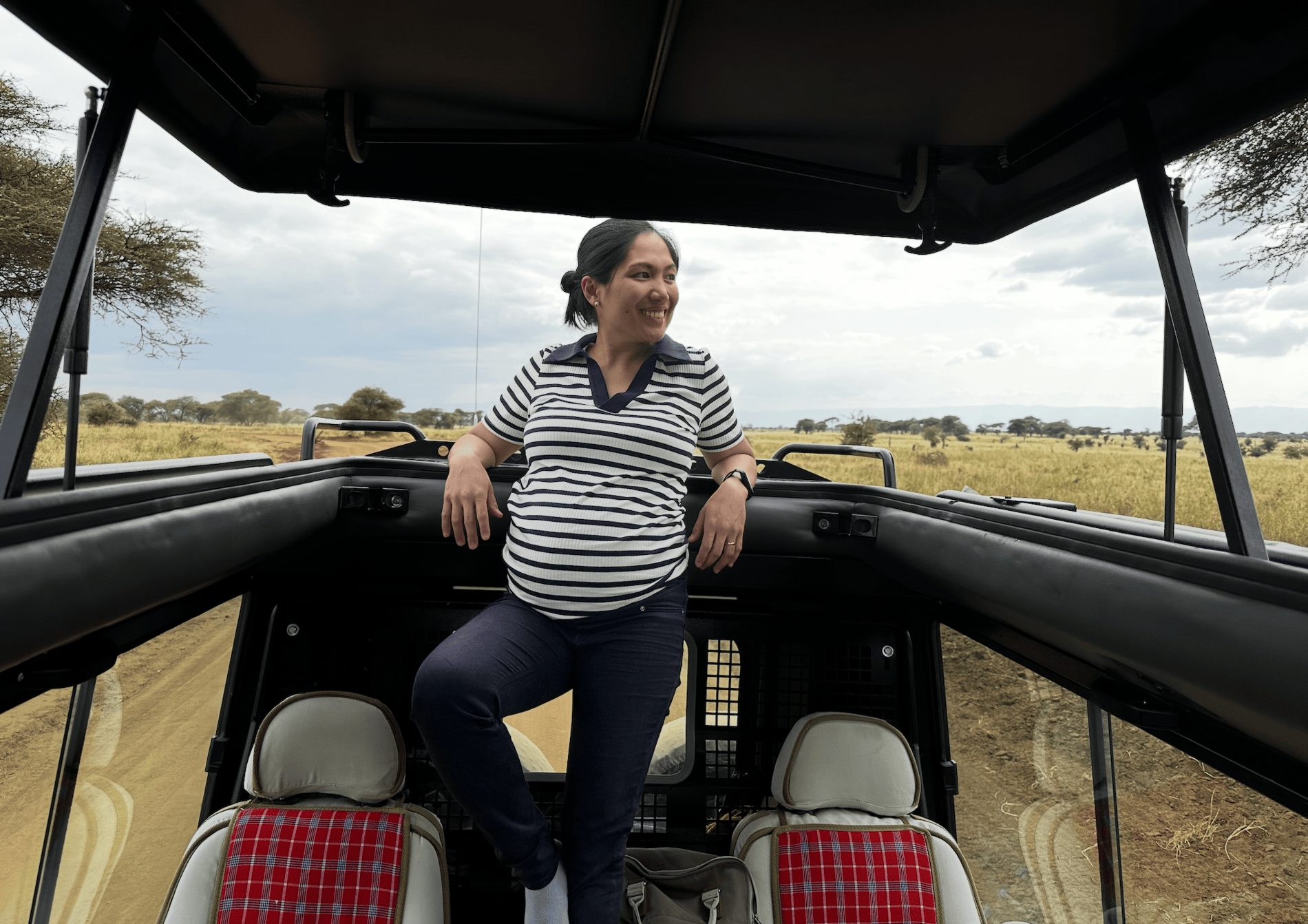
On a Tanzania safari at 26 weeks pregnant
Would I Recommend It for First-Time Moms?
For first-time moms, here’s what I would genuinely advise: Wait if you can, especially if you have a sensitive pregnancy or any medical concerns. First of all, it’s a bumpy ride. Yes, you can fly to shorten the distance, but that still adds travel stress. The roads aren’t unbearable — otherwise, I wouldn’t have gone myself — but most of the route is off-road, and you do spend long hours in the vehicle. It can also get hot. Safari vehicles have air conditioning, but it’s rarely used because of the dust and the need to keep windows open for visibility.
Also, in case of a medical issue, there are no proper hospitals inside the parks. You’d need to return to the city, which can take several hours. There are also limitations. For example, you can’t go on a hot air balloon if that’s something on your bucket list, and obviously no drinking or overly adventurous activities. If it’s your first safari, experiencing it without limitations makes a big difference. But if you have a healthy pregnancy, are in your second trimester, and are cleared for travel — then yes, go for it.
Private Safari Over Shared — No Question
If you do go, definitely book a private safari. Shared safaris are not ideal when you have special conditions. You’ll want the freedom to slow down when needed, take bathroom breaks, or cancel an activity last minute if you don’t feel well. You can’t do that in a group.
I was in a 4x4 vehicle, which was comfortable. The seatbelt sat safely below my belly and gave me a good sense of security. I was on safari for a full seven days and didn’t feel overly tired. We would typically arrive at camp by 5 p.m., have dinner, and get a full night’s sleep. The camps are peaceful, and after dinner, it’s mostly just rest. I didn’t do any extreme physical activity, just the regular game drives. I traveled to and from Serengeti entirely by road, and my baby was completely fine. Of course, shorter drives or flying part of the route would add more comfort.
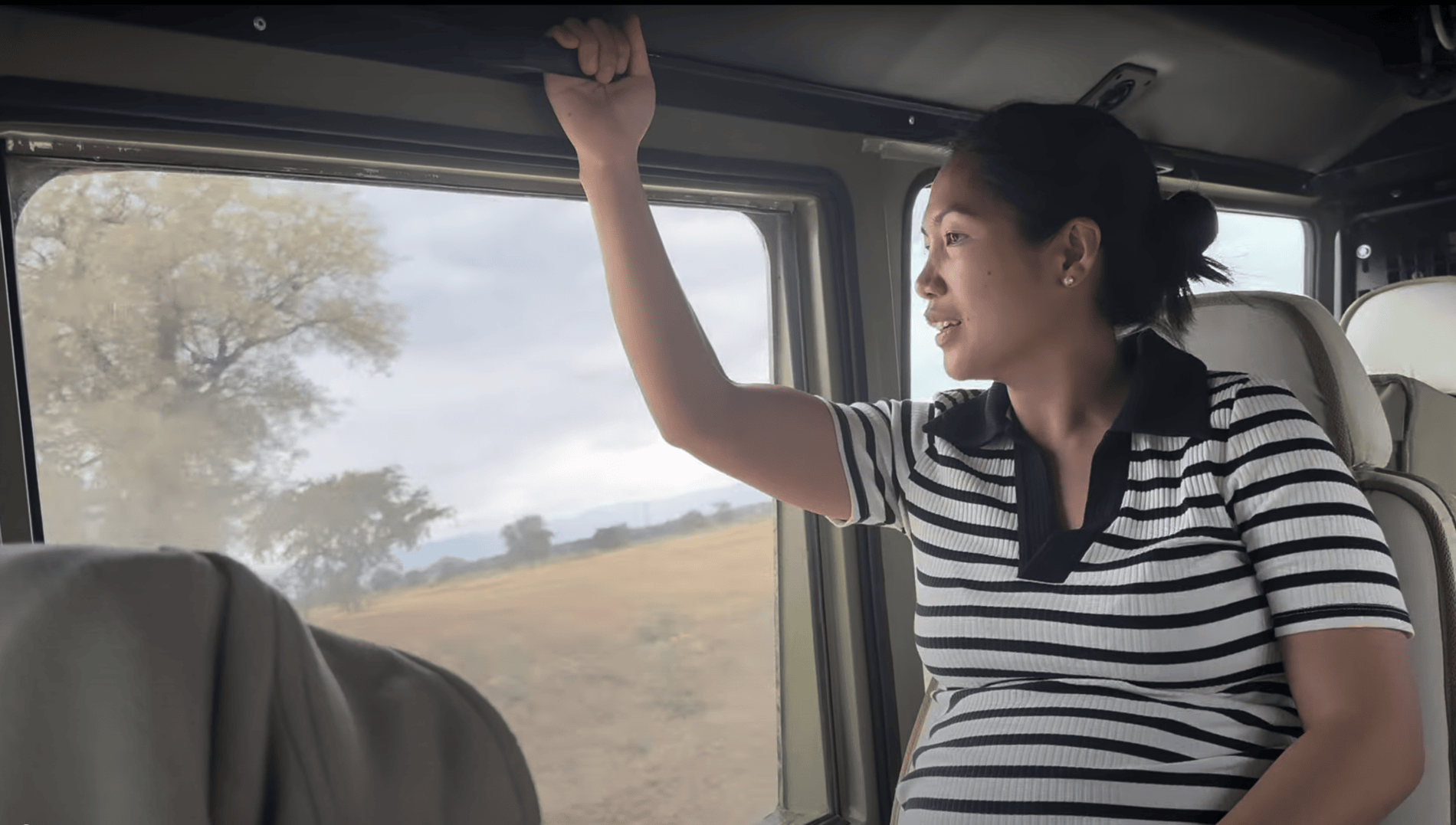
I held on to the grab handles the whole time
Food, Water & Staying Cautious
As for food and hygiene, I avoided raw salads and only ate fully cooked meals at trusted accommodations. I only drank bottled water and brought my own snacks, though I also enjoyed what the lodges offered. I didn’t experience nausea or food issues and saw this as a chance to enjoy the food guilt-free. This is not the time to rough it — book reputable operators and stay in well-reviewed accommodations.
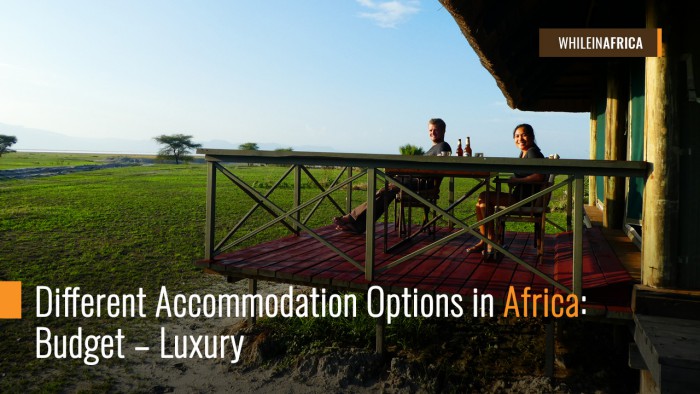
The tented camps we stayed in had wooden structures. There weren’t any stairs where we stayed, but even if there were, it wouldn’t have been an issue — the staff were always helpful and carried the luggage for us. Comfort-wise, everything went smoothly.
Long Drives and What to Expect Physically
The drive from Arusha to Serengeti took about five hours with breaks. It was long but manageable for a healthy pregnancy. If you’re unsure, it’s better to wait — not out of fear, but so you can experience it with peace of mind and no second-guessing.
Altitude and heat are also worth noting. Some areas, like the Ngorongoro Highlands, are at higher elevations, while others get hot mid-day. Ask your doctor if that matters for your situation. The lodges didn’t have air conditioning, but the Tanzanian breeze was enough. Fans weren’t necessary. Most places had mosquito nets — make sure to use them.
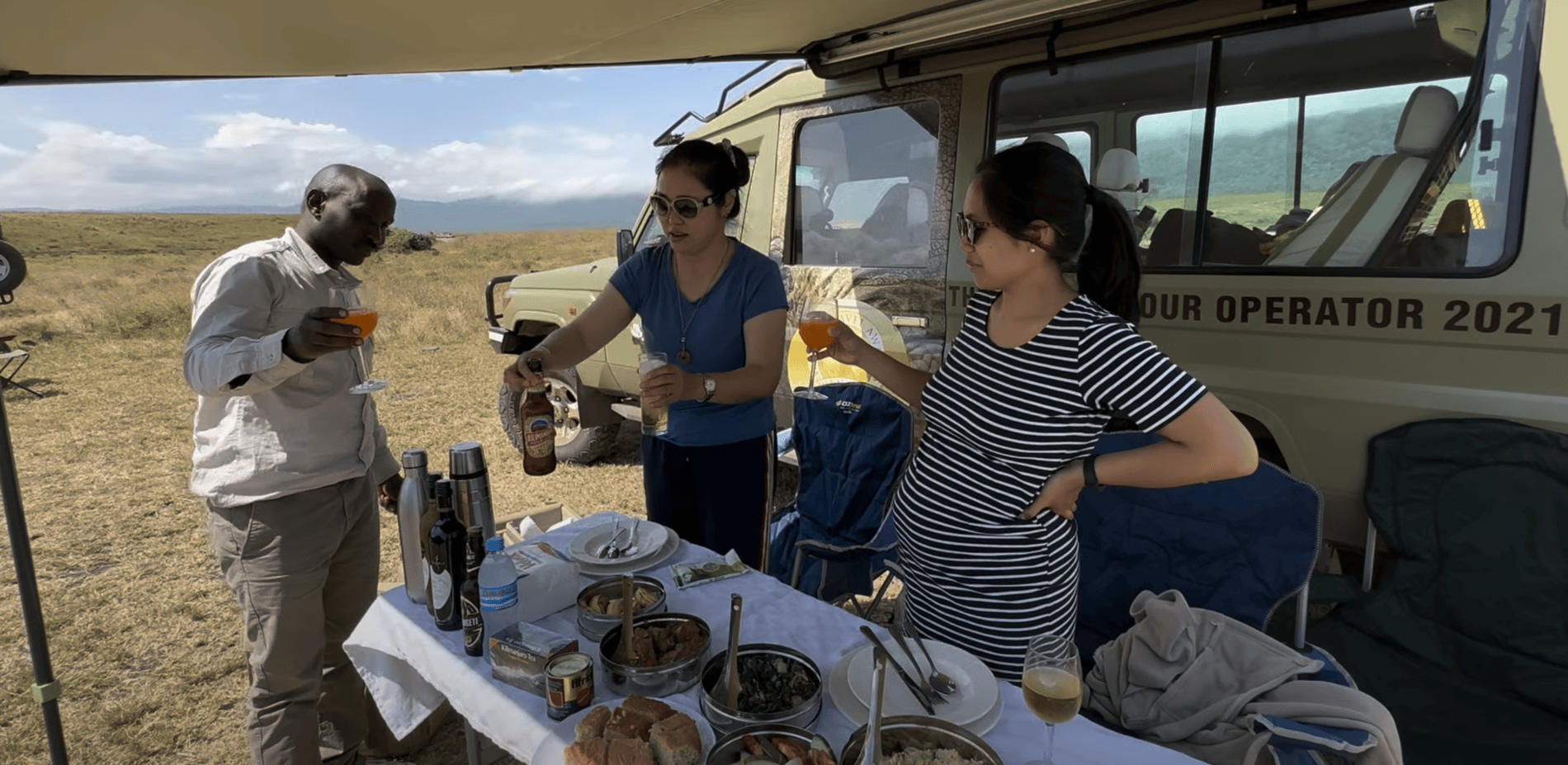
I didn’t go on balloon safaris, which aren’t allowed during pregnancy, but I still enjoyed the game drives, sundowners (non-alcoholic of course), quiet dinners, and the scenery.
Medical Prep & Travel Documents
I consulted my doctor before going and had a medical certificate declaring I was fit to travel — airlines usually ask for this. I brought all my prenatal vitamins and antacids, and I had travel insurance. I had already been vaccinated for yellow fever years ago; otherwise, I would have skipped it while pregnant.
Make sure your travel insurance includes pregnancy-related coverage and emergency evacuation, just in case — especially since parks are remote. I consulted my doctor before going and had a medical certificate declaring I was fit to travel — airlines usually ask for this. I brought all my prenatal vitamins and antacids, and I had travel insurance. I had already been vaccinated for yellow fever years ago; otherwise, I would have skipped it while pregnant.
Looking Back: Worth It, But With Limits
Traveling that far into pregnancy came with its challenges, especially with a heavier belly and some mobility limits. But it was still a meaningful experience — and because I’d done safari before, I didn’t feel like I missed out on anything important.
It’s also nice knowing Amaya (my baby) will someday see photos of her first safari — even if she was still in my belly. A good reminder that if you really want to go, it’s possible — just know your body and your limits.
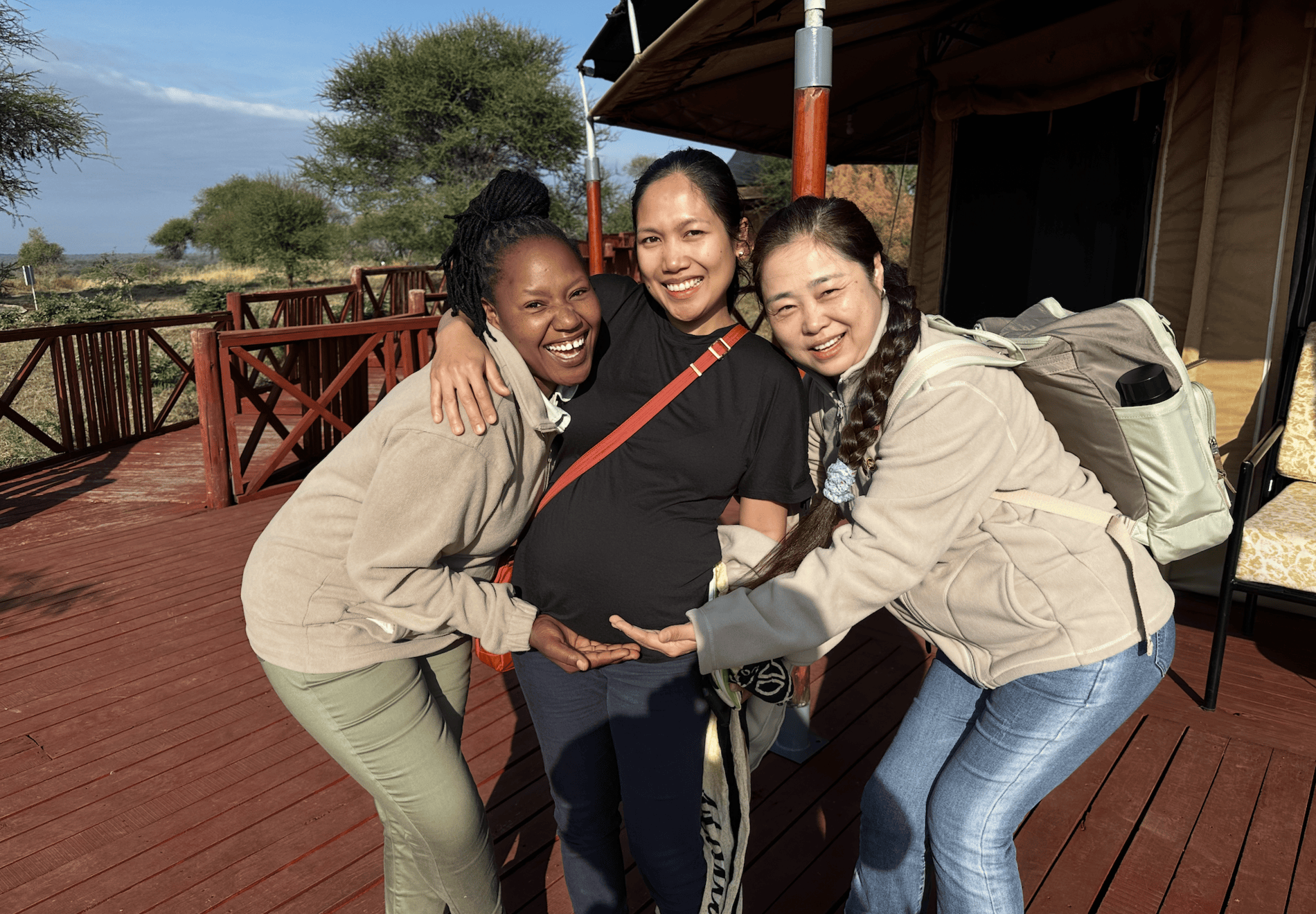
My industry colleagues welcoming Amaya in my belly
Final Tips for Pregnant Travelers
If you do plan to go while pregnant, second trimester is ideal. Here are some things to keep in mind:
- Get medical clearance from your doctor, and only go if your pregnancy is low risk
- Bring a tummy support belt to help with the bumpy rides
- Wear comfortable, breathable clothing that covers your legs to reduce exposure to insect bites — now is not the time to force fashion over comfort
- Pack good walking shoes — you’ll appreciate the support and stability even for short walks
- Bring mosquito repellent and after-bite cream in case you do get bitten
- Choose a tour operator who understands your condition and can accommodate your needs
- Bring a reusable, insulated water bottle — staying hydrated is important and this helps avoid plastic waste
- Load an iPad with your favorite series, pack a good book, and bring a notebook and pen for journaling.
- Bring your favorite tea, decaf coffee, and any comfort items you rely on during pregnancy — snacks, prenatal vitamins, or that one thing you can’t travel without.
Would I Do It Again?
Definitely. Maybe not that pregnant — but the trip itself, I’d do ten times over.